Laser Distance Measurer: A Versatile Tool for Precision in Automation and Robotics
In today’s rapidly evolving technological landscape, precision and reliability are paramount in industries ranging from manufacturing to robotics. One such tool that has gained significant traction is the Laser Distance Measurer, which is now increasingly integrated into Arduino projects to enable accurate distance measurement. This article explores the functionality, applications, and benefits of a Laser Distance Measurer with an Arduino platform, highlighting its role in modern automation and robotics.
A Laser Distance Measurer operates by emitting a laser beam and measuring the time it takes for the beam to return to the sensor after reflecting off a target. This time measurement is converted into a distance, providing highly accurate readings. With the Arduino platform, such sensors can be easily connected and programmed to perform a variety of tasks, from simple object detection to complex motion control.
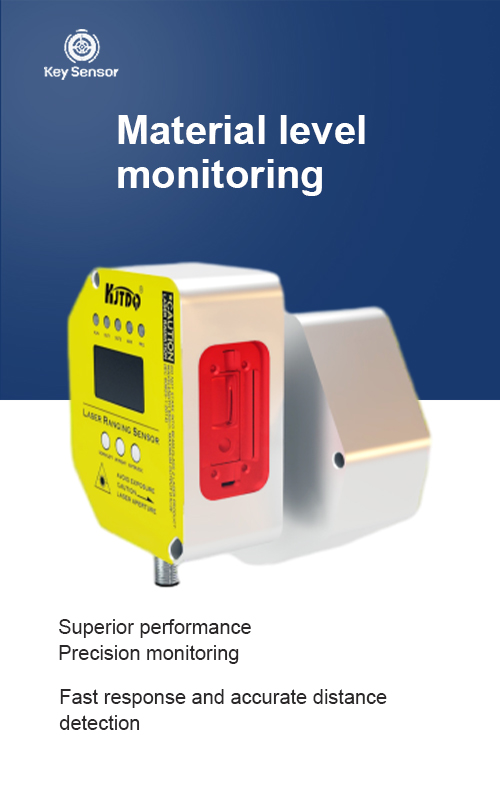
One of the key advantages of using a Laser Distance Measurer with Arduino is its high accuracy. Unlike traditional methods such as ultrasonic sensors, laser distance sensors offer greater precision, especially in low-light conditions or when measuring small distances. This makes them particularly useful in applications where accuracy is critical, such as in precision machinery, robotics, and automated systems.
The Arduino platform is well-suited for integrating Laser Distance Measers due to its simplicity, flexibility, and wide range of available libraries. Developers can easily interface the sensor with the Arduino board, and the Arduino IDE provides a user-friendly environment for writing and testing code. With just a few lines of code, users can calibrate the sensor, set thresholds for distance detection, and even implement real-time data visualization.
Beyond its technical capabilities, a Laser Distance Measurer with Arduino offers versatility in its applications. For instance, it can be used in robotics to enable autonomous navigation, in manufacturing to detect objects on a production line, or in home automation to monitor distances in a smart home environment. Its ability to work with a variety of sensors and control systems makes it a valuable component in a wide range of projects.
Another significant benefit is the cost-effectiveness of using a Laser Distance Measurer with Arduino. While the initial cost may be higher than some other sensors, the long-term savings from reduced errors and increased efficiency make it a compelling choice for both hobbyists and professionals. Moreover, the open-source nature of Arduino and the availability of a vast community of developers mean that users can find a wealth of resources, tutorials, and code snippets to help them get started.
In conclusion, the Laser Distance Measurer with Arduino is a powerful and versatile tool that offers unparalleled precision and flexibility. Whether you’re building a robotics project, automating a production line, or enhancing your home automation system, this sensor can play a crucial role in achieving your goals. By leveraging the capabilities of the Arduino platform, users can unlock new possibilities and push the boundaries of what is possible in the realm of automation and robotics.











 +40729977919
  keysensor.ro@gmail.com




