Laser Distance Sensor: Enhancing Precision in Modern Automation and Robotics
In today’s fast-evolving technological landscape, precision and reliability are critical for industries ranging from manufacturing to aerospace. Among the many tools that enable these high-performance applications, the laser distance sensor stands out as a key innovation. These sensors utilize laser technology to measure distances with remarkable accuracy, making them indispensable in automation, robotics, and industrial inspection systems.
A laser distance sensor works by emitting a laser beam and measuring the time it takes for the beam to return to the sensor after reflecting off a surface. This time measurement is then converted into a distance value, allowing the sensor to determine the distance to an object with high precision. The technology is well-suited for applications where high accuracy and consistency are required, such as in quality control, material handling, and real-time monitoring.
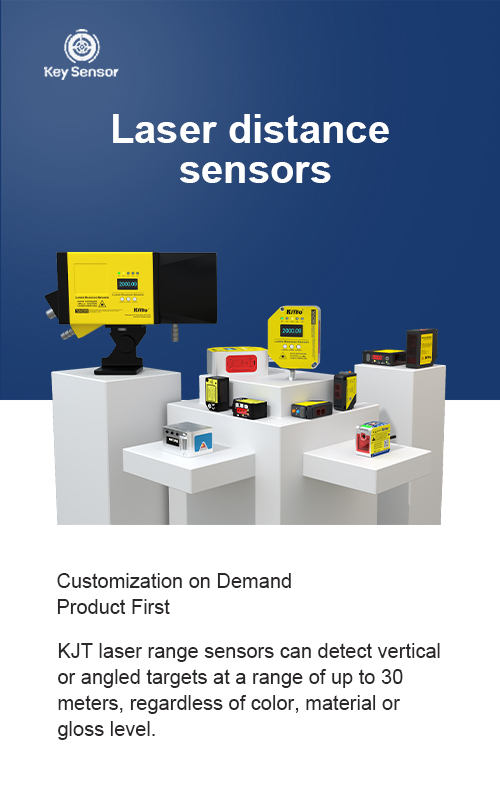
One of the most significant advantages of laser distance sensors is their non-contact measurement capability. Unlike traditional sensors that may require physical contact or have limited range, laser sensors can measure distances up to several meters or even more, depending on the model. This feature is particularly valuable in environments where physical contact could damage the object being measured or where space is limited.
In addition to their accuracy, laser distance sensors are known for their robustness and reliability. They are often designed with moisture resistance, dust protection, and environmental durability in mind, making them suitable for use in harsh conditions. This durability ensures that the sensors can operate continuously without frequent maintenance, reducing downtime and improving overall efficiency.
As industries continue to adopt automation and robotics, the demand for high-precision sensors has never been greater. Laser distance sensors play a crucial role in enabling these systems to function seamlessly. Whether it’s in a factory line, a robotic arm, or a warehouse automation system, these sensors provide the critical data needed to ensure accuracy and efficiency.
Another notable benefit of laser distance sensors is their versatility. They can be calibrated for different environments and objects, making them adaptable to various applications. This adaptability ensures that the sensors can be used in a wide range of scenarios, from small-scale operations to large industrial setups.
In conclusion, laser distance sensors are a vital component in modern automation and robotics. Their ability to provide accurate, non-contact distance measurements makes them an essential tool for industries that require precision and reliability. As technology continues to advance, the role of laser distance sensors will only become more critical, driving innovation and efficiency across multiple sectors.











 +40729977919
  keysensor.ro@gmail.com




