Arduino-Based Laser Sensor for Measuring Laser Power and Distance
In today’s rapidly evolving technological landscape, precision measurement has become more critical than ever, especially in fields such as industrial automation, robotics, and material science. Among the various sensors used for this purpose, the laser sensor stands out for its high accuracy and versatility. With the growing popularity of Arduino-based systems, integrating a laser sensor into an Arduino project opens up new possibilities for real-time data acquisition and analysis. This article explores how an Arduino laser sensor can be used to measure laser power and distance, providing a practical guide for beginners and enthusiasts alike.
A laser sensor typically consists of a laser diode, a photodiode or光电二极管, and a microcontroller. When the laser beam is directed at the sensor, the intensity of the reflected light is measured, allowing for the calculation of the distance or power of the laser. In the case of distance measurement, the sensor uses the principle of triangulation or time-of-flight to determine the distance between the sensor and the object. For power measurement, the sensor measures the intensity of the laser beam and converts it into a digital signal that can be processed by the Arduino.
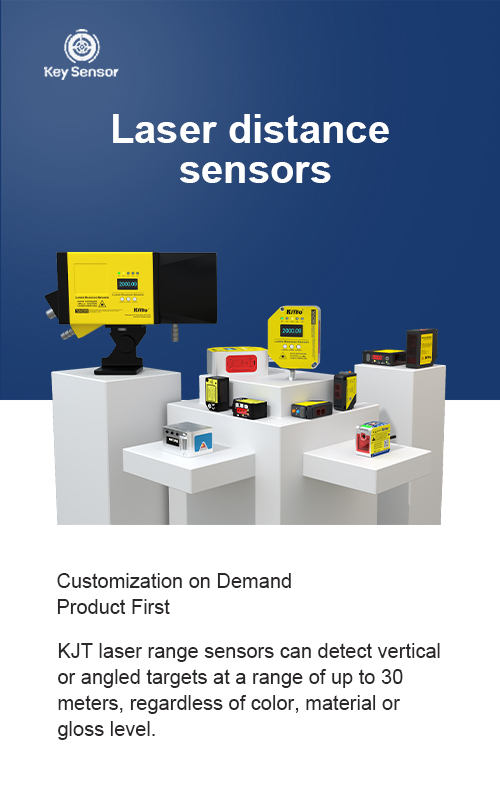
Arduino, being a microcontroller platform with extensive libraries and ease of use, is well-suited for integrating laser sensors into projects. The key to successful integration lies in the proper calibration of the sensor, the use of appropriate hardware, and the implementation of accurate data processing algorithms. For instance, the sensor may output a voltage signal proportional to the intensity of the laser beam, which can then be read by the Arduino’s analog input pins. This signal is converted into a digital value, which is then processed to determine the power or distance.
One of the most common applications of an Arduino laser sensor is in distance measurement. For example, a laser sensor can be mounted on a robotic arm to measure the distance to an object in real time. This information is crucial for tasks such as object detection, motion control, and precision machining. The sensor can be connected to an Arduino board, and the output can be displayed on an LCD screen or printed to a serial monitor. The accuracy of the sensor is influenced by factors such as the wavelength of the laser, the ambient light conditions, and the sensor’s sensitivity. Proper calibration ensures that the sensor provides reliable measurements in various environments.
Another application of an Arduino laser sensor is in power measurement. This is particularly useful in laser cutting and engraving applications, where precise control over the laser’s power is essential. The sensor can measure the power of the laser beam and send this information to a microcontroller or computer for processing. This allows for real-time adjustments to the laser’s power output, ensuring optimal performance and minimizing energy waste.
In addition to these applications, the integration of a laser sensor with an Arduino can be extended to more complex systems. For instance, a laser sensor can be used in a smart home system to detect the presence of objects, or in an environmental monitoring system to measure the concentration of certain substances. The flexibility of the Arduino platform and the versatility of the laser sensor make it a powerful tool for a wide range of applications.
When integrating a laser sensor with an Arduino, several considerations must be taken into account. First, the choice of sensor is crucial. Different sensors are available for different applications, and selecting the right one is essential for accuracy. Second, the hardware setup must be carefully planned to ensure proper connectivity and signal integrity. Finally, the software must be calibrated to provide reliable data. For example, the Arduino code may need to include functions for reading the sensor input, converting the analog signal into a digital value, and processing the data for distance or power measurement.
In conclusion, the integration of an Arduino laser sensor offers a reliable and efficient way to measure laser power and distance. Whether it is used for industrial automation, robotics, or environmental monitoring, the sensor provides valuable data that can enhance the performance of various systems. As technology continues to advance, the role of the Arduino laser sensor in modern applications will only grow more significant. With careful planning and implementation, users can harness the full potential of this powerful combination.





















 +40729977919
  keysensor.ro@gmail.com


