Luzer Lidar Laser Sensor: Enhancing Precision and Accuracy in Modern Applications
In today’s rapidly evolving technological landscape, precision and accuracy are paramount across industries ranging from automotive to aerospace. At the heart of these advancements lies the Luzer Lidar Laser Sensor, a cutting-edge device that plays a critical role in enabling advanced sensing and measurement capabilities. This article explores the key features, applications, and benefits of the Luzer Lidar Laser Sensor, emphasizing its significance in modern technology.
The Luzer Lidar Laser Sensor is a sophisticated optical sensor that uses laser technology to measure distances and create detailed 3D maps of its surroundings. Unlike traditional sensors, it operates by emitting laser beams and measuring the time it takes for them to return to the sensor after reflecting off an object. This process allows for high-resolution distance measurements with remarkable accuracy, making it ideal for a wide range of applications.
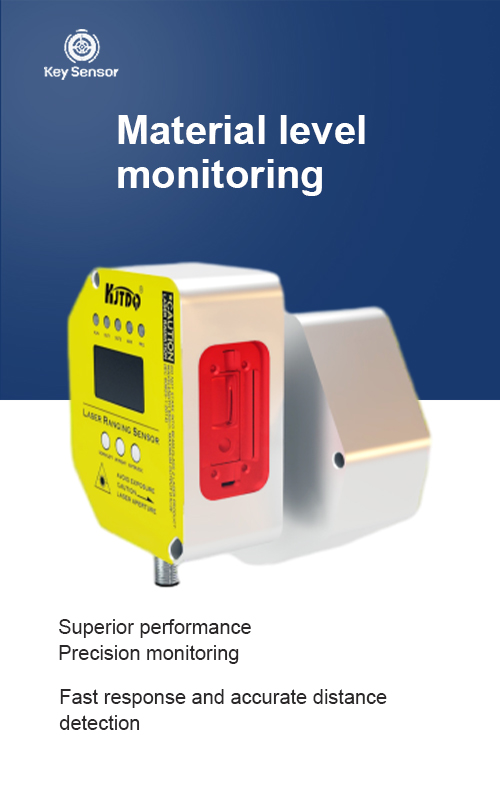
One of the most significant advantages of the Luzer Lidar Laser Sensor is its ability to provide real-time data. This real-time capability is crucial in industries such as autonomous vehicles, where quick and accurate readings are essential for safe navigation. The sensor can detect obstacles, track moving objects, and even identify pedestrians, enhancing the safety and efficiency of autonomous systems.
Moreover, the Luzer Lidar Laser Sensor is highly versatile and can be adapted for various environments, from urban settings to industrial facilities. Its robust design and reliable performance make it suitable for harsh conditions, ensuring consistent results even in challenging environments. This adaptability is a key factor in its widespread adoption across multiple sectors.
In the field of autonomous driving, the Luzer Lidar Laser Sensor serves as a critical component in enabling self-driving vehicles to perceive their surroundings. By providing precise spatial data, it helps the vehicle make informed decisions and navigate safely. The integration of this sensor with other advanced technologies, such as machine learning and AI, further enhances its capabilities, allowing for more intelligent and responsive driving experiences.
Another important application of the Luzer Lidar Laser Sensor is in the field of robotics and automation. In industrial settings, it is used to create detailed maps of environments, which are essential for navigation and path planning. The sensor’s high-resolution imaging and accurate distance measurement make it an invaluable tool for robotics, ensuring that machines can operate efficiently and safely in complex environments.
In addition to its use in automotive and industrial applications, the Luzer Lidar Laser Sensor is also finding increasing applications in fields such as agriculture and construction. In agriculture, it can be used to monitor crop health and optimize harvesting processes. In construction, it helps in creating detailed 3D models of sites, improving project planning and execution.
The Luzer Lidar Laser Sensor is not just a technological advancement—it is a transformative tool that is reshaping how we perceive and interact with our environment. Its integration into various industries highlights its versatility and importance in the modern technological landscape. As technology continues to evolve, the role of the Luzer Lidar Laser Sensor will only become more significant, driving innovation and enhancing the precision of our daily activities.
In conclusion, the Luzer Lidar Laser Sensor represents a major leap forward in sensing and measurement technology. Its ability to provide accurate, real-time data makes it an essential component in many modern applications. As industries continue to rely on advanced technologies, the Luzer Lidar Laser Sensor will remain a key enabler of precision and innovation.





















 +40729977919
  keysensor.ro@gmail.com


