Laser Alignment Sensor: Enhancing Precision in Modern Manufacturing
In today’s fast-paced manufacturing industry, precision and efficiency are the cornerstones of success. As production becomes increasingly automated and complex, the demand for accurate measurement and alignment technologies has never been higher. One such innovation that is revolutionizing the field is the laser alignment sensor. This cutting-edge device plays a crucial role in ensuring that machinery, components, and systems are aligned with the required accuracy, thereby improving overall performance and reducing errors.
The laser alignment sensor operates by emitting a laser beam that reflects off a target surface and returns to the sensor. The sensor then calculates the position and orientation of the target with high precision. This method is not only highly accurate but also non-contact, eliminating the risk of physical wear or damage to the equipment being measured. Unlike traditional alignment methods that often require manual adjustments or mechanical tools, laser alignment sensors provide a fast, reliable, and repeatable solution.
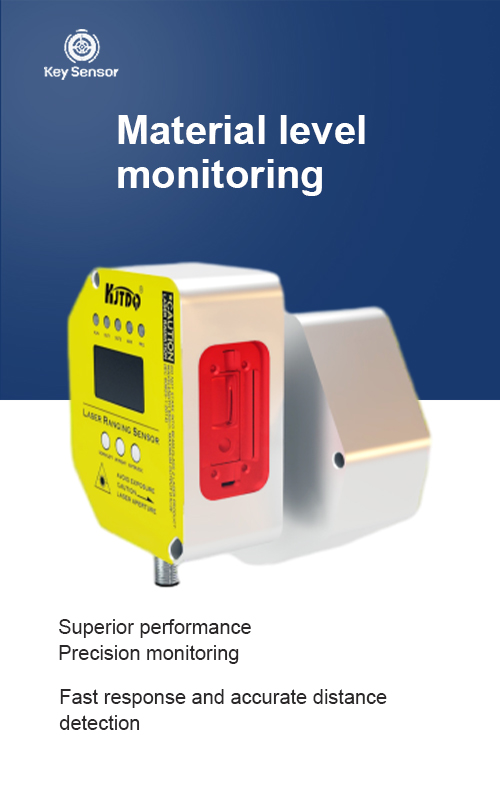
One of the key advantages of the laser alignment sensor is its versatility. It can be used in a wide range of applications, including robotics, CNC machining, alignment of parts in assembly lines, and even in aerospace and automotive industries. The sensor’s ability to detect minute displacements makes it ideal for applications where even the slightest misalignment can lead to significant errors. For example, in the manufacturing of high-precision components, a small misalignment can result in functional failures, so the laser alignment sensor ensures that every part is aligned to the exact specifications.
The laser alignment sensor is also highly user-friendly. It is typically connected to a computer or control system, which processes the data and provides real-time feedback. This integration allows for immediate adjustments and minimizes the need for manual intervention. As a result, it significantly reduces the time required for setup and maintenance, making it a cost-effective solution for businesses looking to improve productivity.
With the advancement of technology, laser alignment sensors have become more accurate and reliable. Modern sensors are equipped with advanced algorithms that enhance their performance, allowing for greater precision in alignment tasks. Additionally, the integration of IoT (Internet of Things) and AI (Artificial Intelligence) technologies is further improving the capabilities of these sensors, enabling them to learn from data and adapt to changing conditions in real-time.
Another important consideration is the laser alignment sensor’s ability to work in challenging environments. Whether it is in a high-temperature workshop or a remote location, the sensor remains stable and accurate. This makes it a valuable tool for industries that operate in demanding conditions, where traditional alignment methods may not be feasible.
In conclusion, the laser alignment sensor is a vital technology in modern manufacturing, offering unmatched precision and reliability. By integrating this innovation into production processes, businesses can achieve higher quality, faster production, and reduced costs. As industries continue to evolve, the laser alignment sensor will remain a key component in the pursuit of excellence and efficiency.





















 +40729977919
  keysensor.ro@gmail.com


