Sick 2D Laser Scanner: Revolutionizing Precision in Industrial Automation
In today’s rapidly evolving industrial landscape, the demand for precise and reliable measurement technologies has never been higher. At the heart of modern automation systems lies the 2D laser scanner, a powerful tool that enables accurate spatial mapping and real-time data collection. One of the most advanced and widely used models in this field is the Sick 2D Laser Scanner, a device that has become a cornerstone in industries ranging from robotics to logistics and automotive manufacturing.
The Sick 2D Laser Scanner operates by emitting a beam of laser light and measuring the time it takes for the light to return to the sensor after reflecting off an object. This process, known as LIDAR (Light Detection and Ranging), allows the scanner to create detailed 2D maps of the environment in real time. Unlike traditional sensors, the 2D laser scanner provides high-resolution data with minimal calibration requirements, making it an ideal choice for applications where precision and efficiency are critical.
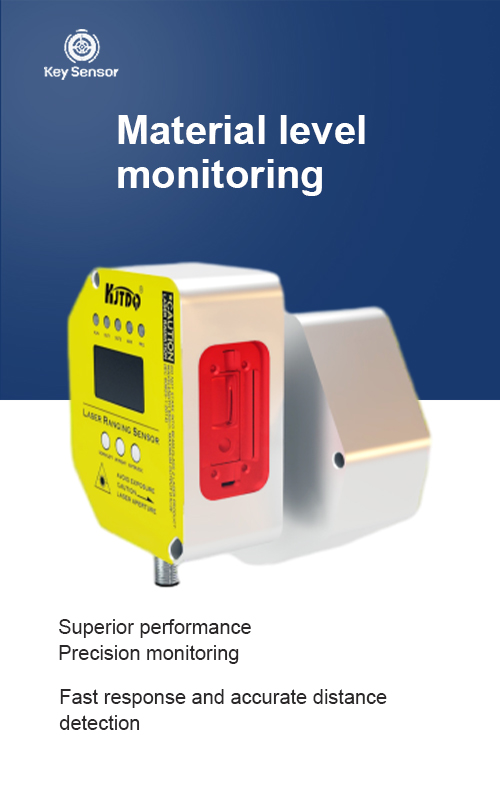
One of the key advantages of the Sick 2D Laser Scanner is its high accuracy and repeatability, which is essential in industrial settings where even minor errors can lead to significant production losses. The scanner’s ability to operate in various environmental conditions—such as low light, dust, and moisture—makes it highly versatile. Additionally, its fast data processing speed ensures that it can keep up with the high-speed requirements of modern automation systems.
The Sick 2D Laser Scanner is often used in robotics for navigation and object detection. In robotic arms, it provides the necessary spatial data to enable precise movements and avoid obstacles. This is particularly important in applications such as assembly lines, material handling, and warehouse automation, where accuracy is crucial for minimizing errors and maximizing productivity.
Another important application of the Sick 2D Laser Scanner is in autonomous vehicles and drone navigation. By providing real-time 2D mapping of the surroundings, the scanner helps vehicles to navigate safely and efficiently, even in complex and dynamic environments. This is especially valuable in urban settings or dense forests, where traditional navigation systems may struggle.
The Sick 2D Laser Scanner also plays a vital role in quality control and inspection systems. In manufacturing, it can be used to inspect products for defects, ensuring that only high-quality items reach the market. Its ability to create 3D models of objects allows for non-contact inspection, reducing the risk of damage to the products being inspected and improving overall efficiency.
Despite its many advantages, the Sick 2D Laser Scanner is not without its challenges. One of the main concerns is cost—while it offers high performance, it can be expensive to purchase and maintain. Additionally, software integration can sometimes be complex, requiring specialized training and support. However, advancements in AI and machine learning are gradually addressing these issues, making the scanner more user-friendly and accessible to a broader range of industries.
In conclusion, the Sick 2D Laser Scanner represents a significant advancement in the field of industrial automation. Its ability to provide high-accuracy, real-time data makes it an indispensable tool in modern manufacturing and robotics. As technology continues to evolve, the role of the 2D laser scanner will only become more critical, driving innovation and efficiency across various industries. Whether in a factory floor, a warehouse, or an autonomous vehicle, the Sick 2D Laser Scanner is paving the way for a more precise and intelligent future.











 +40729977919
  keysensor.ro@gmail.com




