Arduino-Based IR Laser Sensor: A Comprehensive Guide to Integration and Applications
In today’s rapidly evolving technological landscape, the integration of sensors into everyday devices has become increasingly common. One of the most versatile and widely used sensors in modern electronics is the infrared (IR) laser sensor. These sensors are particularly well-suited for applications in robotics, automation, security systems, and even in consumer electronics. This article explores the fundamentals of IR laser sensors, their integration with Arduino platforms, and their diverse applications.
An IR laser sensor operates by detecting the intensity of infrared light reflected off an object. The sensor emits a beam of infrared light and measures the amount of light that returns. This measurement helps determine the distance of the object from the sensor. The key component in an IR laser sensor is the laser diode, which emits the infrared light, and the photodiode or phototransistor, which detects the reflected light. The sensor is often paired with a microcontroller, such as the Arduino, to process the sensor data and control the system accordingly.
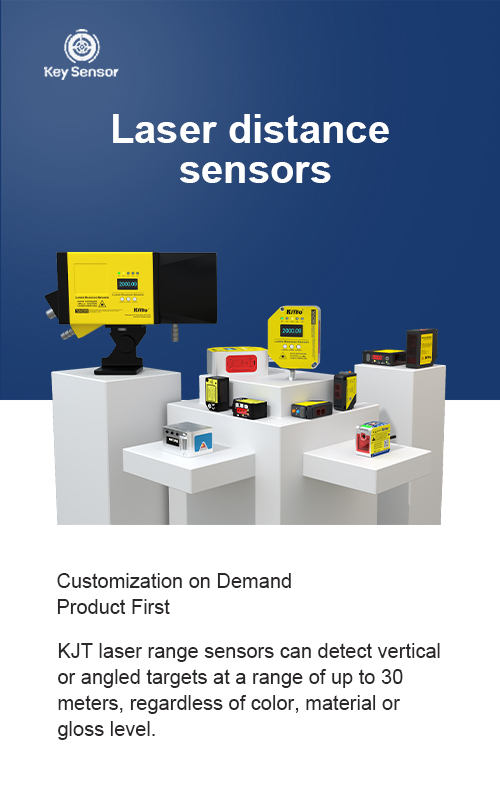
Arduino, a popular open-source electronics platform, is ideal for projects involving sensors and actuators. Its simplicity, affordability, and extensive community support make it a preferred choice for hobbyists and professionals alike. When integrating an IR laser sensor with an Arduino, the process involves several steps, including hardware setup, calibration, and data processing.
First, the hardware setup involves connecting the IR laser sensor to the Arduino board. The sensor typically has a small pin header for the laser diode and a photodiode, which must be connected to the appropriate digital or analog pins on the Arduino. Once the hardware is connected, the next step is calibration. This involves adjusting the sensor’s sensitivity and offset to ensure accurate distance measurements. Calibration can be done using a known object at various distances, and the sensor data is recorded and used to fine-tune the system.
Once the sensor is calibrated, the next step is data processing. The Arduino reads the sensor data from the analog or digital pins and processes it using a simple algorithm. The raw sensor output is typically a voltage level, which can be converted into a distance using a calibration curve. This curve is created by measuring the sensor output at known distances and mapping the values accordingly.
The IR laser sensor is not only used for distance measurement but also has a variety of applications. In robotics, it can be used to detect obstacles and navigate around them. In security systems, it can be employed to detect motion or intrusions. In consumer electronics, it can be used in laser pointers or image sensors for enhanced functionality.
One of the key advantages of IR laser sensors is their high precision and reliability. They are less affected by environmental factors such as light interference or temperature variations, making them ideal for applications where accuracy is crucial. Additionally, their compact size and low power consumption make them suitable for a wide range of devices.
Another important aspect of IR laser sensor integration with Arduino is the use of libraries and code examples. The Arduino ecosystem provides several libraries that simplify the process of reading sensor data and processing it. These libraries handle tasks such as reading analog inputs, converting sensor values to distances, and sending the data to a computer or another device.
In conclusion, the integration of IR laser sensors with Arduino platforms opens up a wide range of possibilities for innovation and automation. Whether it is for robotics, security, or consumer electronics, the IR laser sensor offers a reliable and precise solution for distance detection. With proper calibration and data processing, these sensors can be effectively used to enhance the functionality of various systems. As technology continues to advance, the role of IR laser sensors in modern electronics will only become more prominent.











 +40729977919
  keysensor.ro@gmail.com




