Arduino Tof10120Laser Sensor: A Comprehensive Guide to Integration and Applications
The Arduino Tof10120Laser Sensor is a powerful and versatile device designed to detect and measure the distance of objects in the environment. This sensor combines the capabilities of a laser ranging system with the flexibility of the Arduino platform, making it an ideal choice for projects involving distance sensing, robotics, and automation. In this article, we will explore the features, functionality, and applications of the Tof10120Laser Sensor, along with how to integrate it into an Arduino project.
The Tof10120Laser Sensor operates on the principle of light detection and ranging (LIDAR), which uses laser light to measure distances. It emits a laser beam and measures the time it takes for the light to return after reflecting off an object. This information is then processed to calculate the distance to the object, allowing for precise and reliable distance measurements. The sensor is particularly well-suited for applications where high accuracy and speed are required, such as in robotics, automation, and environmental monitoring.
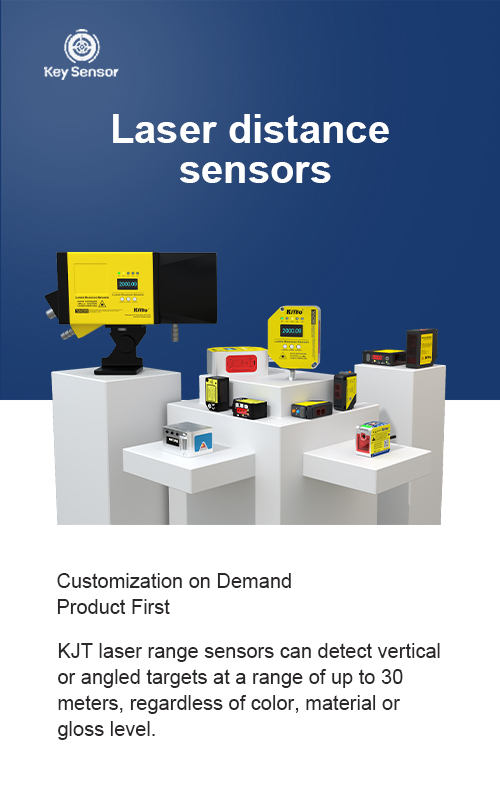
One of the key advantages of the Tof10120Laser Sensor is its high resolution and accuracy. It can detect objects at distances ranging from a few centimeters to several meters, depending on the configuration. This makes it a valuable tool for projects that require precise measurement of small objects or large distances. Additionally, the sensor is compatible with a wide range of Arduino boards, making it accessible to both beginners and experienced users.
To integrate the Tof10120Laser Sensor into an Arduino project, the first step is to connect it to the board. The sensor typically has a 4-pin interface, with the power supply, ground, signal, and data pins. The signal pin is connected to the Arduino’s digital input pin, while the data pin is connected to the Arduino’s analog output pin. It is important to ensure that the power supply is stable and that the connections are secure to avoid any signal loss or interference.
Once the sensor is connected, the next step is to write the appropriate code to read and process the sensor data. The Arduino environment provides libraries that simplify the integration process. For example, the Tof10120Laser Sensor library allows for easy configuration and data acquisition. By using these libraries, developers can quickly implement the sensor in their projects without having to deal with low-level hardware interfacing.
In addition to its use in basic projects, the Tof10120Laser Sensor can be utilized in more complex applications. For instance, it can be used in robotics to determine the distance to obstacles, enabling the robot to navigate safely. In automation, the sensor can be used to monitor the position of objects or to trigger actions based on distance measurements. In environmental monitoring, the sensor can be used to measure the distance of objects from a fixed point, providing valuable data for analysis and decision-making.
The Tof10120Laser Sensor also offers flexibility in its use. It can be configured for different measurement ranges, and the output can be processed to provide various types of data, such as distance in centimeters or millimeters. This flexibility makes it a versatile tool for a wide range of applications, from simple distance measurement to more advanced automation systems.
In conclusion, the Tof10120Laser Sensor is a valuable addition to any project that requires precise distance measurement. Its integration with the Arduino platform makes it an excellent choice for both educational and practical applications. Whether you’re building a simple distance sensor or a more complex automation system, the Tof10120Laser Sensor provides the accuracy and reliability needed to achieve your goals. With the right setup and use, this sensor can significantly enhance the functionality and performance of your projects.





















 +40729977919
  keysensor.ro@gmail.com


