Sick Distance Laser Sensor: Enhancing Safety and Precision in Modern Automation
In the rapidly evolving world of industrial automation, the integration of advanced sensors has become essential for ensuring safety, efficiency, and precision. One such innovation that is gaining significant traction is the Sick Distance Laser Sensor. This sensor is designed to measure the distance between a moving object and a fixed surface with high accuracy, making it an indispensable tool in various applications, from manufacturing to robotics and even in healthcare.
The Sick Distance Laser Sensor operates based on laser technology, emitting a laser beam and measuring the time it takes for the beam to reflect back. This method allows for highly reliable distance measurements, even in challenging environments where traditional methods may fail. Its ability to function in various light conditions and maintain consistent accuracy makes it a versatile solution for a wide range of industries.
Key Features of the Sick Distance Laser Sensor
One of the most notable features of the Sick Distance Laser Sensor is its high precision. Unlike analog sensors that may suffer from drift or inaccuracies over time, the laser sensor provides consistent readings due to its digital nature. This reliability is crucial in applications where even a small error can lead to significant consequences, such as in automated assembly lines or in robotic arms that need to maintain exact distances to perform tasks.
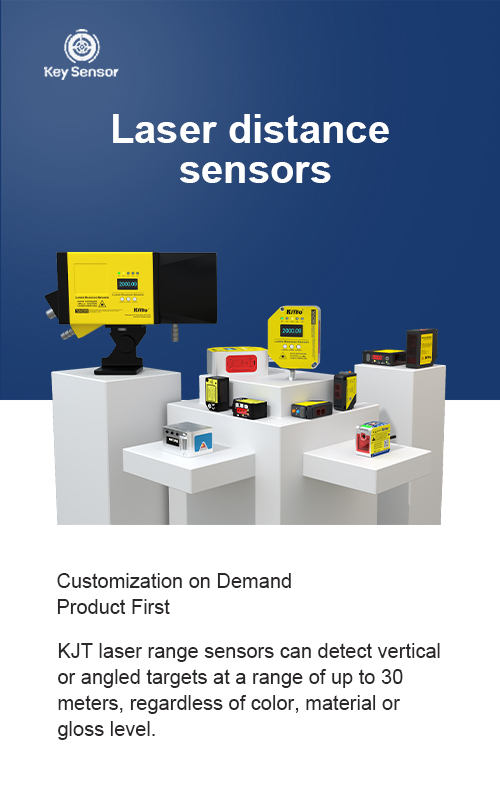
Another important aspect is its versatility. The sensor can be used in both fixed and moving environments, making it suitable for a variety of applications. Whether it’s measuring the distance between a conveyor belt and a product, or detecting objects in a warehouse, the Sick Distance Laser Sensor adapts to the needs of the environment.
Applications in Industry and Beyond
In manufacturing, the Sick Distance Laser Sensor is widely used to monitor the position of parts on a production line. It ensures that each component is placed at the correct distance from a machine, preventing over- or under-feeding and reducing waste. This not only improves efficiency but also enhances product quality.
In robotics, the sensor plays a crucial role in enabling precise movements. For example, in robotic arms used in automotive assembly, the sensor ensures that the arm moves exactly where it needs to, avoiding collisions and ensuring safe operation. Its ability to work in real-time makes it ideal for dynamic environments where quick and accurate responses are necessary.
Beyond manufacturing, the Sick Distance Laser Sensor is also finding applications in healthcare. In surgical robotics, it is used to maintain a safe distance between the surgeon and the surgical tools, ensuring patient safety and the accuracy of the procedure.
Advantages Over Traditional Sensors
Compared to traditional sensors like ultrasonic or infrared sensors, the Sick Distance Laser Sensor offers several advantages. It is more accurate, more durable, and less prone to environmental interference. Additionally, it does not require a direct line of sight, making it suitable for use in complex or cluttered spaces.
Another benefit is its low maintenance. Since it relies on laser technology, it requires minimal calibration and has fewer moving parts, reducing the risk of wear and tear. This results in lower long-term costs and increased uptime.
Conclusion
The Sick Distance Laser Sensor is a groundbreaking innovation that is reshaping the way industries approach automation and safety. Its high precision, versatility, and reliability make it a valuable tool in a wide range of applications. As technology continues to advance, the role of such sensors will only become more critical. By integrating the Sick Distance Laser Sensor into their operations, businesses can achieve greater efficiency, accuracy, and safety in their processes.





















 +40729977919
  keysensor.ro@gmail.com


