Laser Distance Sensor: Revolutionizing Precision in Modern Automation
In today’s rapidly evolving technological landscape, precision and reliability are no longer optional—they are essential. At the heart of modern automation and industrial processes lies the Laser Distance Sensor, a cutting-edge device that plays a critical role in ensuring accuracy and efficiency in real-time measurements. This article explores the fundamentals of the laser distance sensor, its applications, and how it is transforming industries across the globe.
A Laser Distance Sensor operates by emitting a pulsed laser beam and measuring the time it takes for the light to return to the sensor after reflecting off an object. This principle allows the sensor to calculate the distance to the object with remarkable precision. The sensor typically uses time-of-flight (TOF) technology, where the distance is determined by the time it takes for the laser pulse to return. This method is highly accurate and suitable for a wide range of applications, from robotics and automation to quality control and industrial inspection.
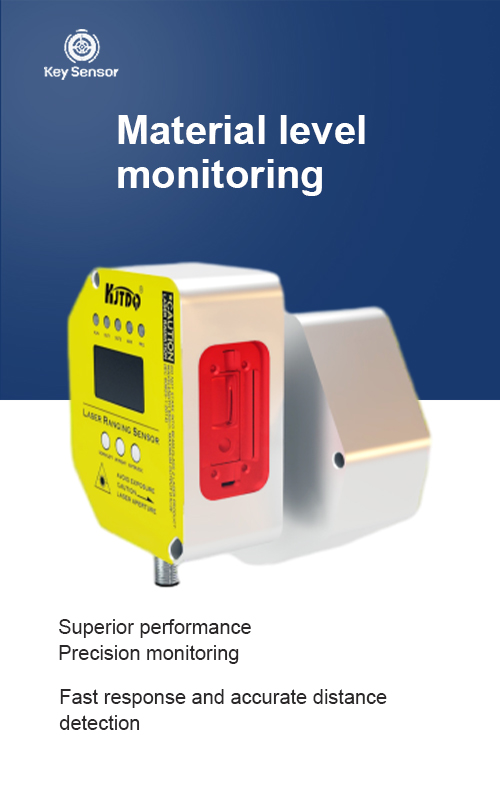
The advantages of laser distance sensors are numerous. Unlike traditional methods such as ultrasonic or optical sensors, laser sensors offer higher resolution and accuracy, especially in low-light or high-precision environments. They are also immune to interference from dust, moisture, and other environmental factors, making them ideal for use in challenging conditions. Additionally, the compact size and low power consumption of modern laser sensors make them suitable for integration into a variety of devices and systems.
In the manufacturing industry, laser distance sensors are widely used for tasks such as object detection, positioning, and quality inspection. For example, in assembly lines, these sensors ensure that components are placed accurately, reducing errors and increasing production efficiency. In robotics, they enable precise movement and interaction with objects, making robotic arms more adaptable and reliable. Similarly, in lighting and HVAC systems, laser sensors are used to monitor distances and adjust light intensity or airflow accordingly, contributing to energy efficiency and comfort.
Beyond manufacturing, laser distance sensors have applications in agriculture, where they are used to monitor the distance between crops and machinery, optimizing planting and harvesting processes. In healthcare, they are employed in medical devices to measure distances for accurate diagnosis and treatment. These diverse applications highlight the versatility and importance of laser distance sensors in modern technology.
As industries continue to push the boundaries of innovation, the Laser Distance Sensor remains a key component in achieving precision and efficiency. Its ability to operate in diverse environments and deliver high-accuracy measurements makes it an indispensable tool in automation and industrial processes. With ongoing advancements in sensor technology, the future of laser distance sensors looks promising, offering new possibilities for innovation and performance.
In conclusion, the Laser Distance Sensor is a vital technological advancement that is shaping the future of automation and industrial applications. Its ability to provide precise measurements in real time makes it an essential tool for industries worldwide. As technology evolves, so too will the role of the Laser Distance Sensor in driving efficiency, accuracy, and innovation.





















 +40729977919
  keysensor.ro@gmail.com


