Keyence Laser Triangulation Laser Sensor: Enhancing Precision in Industrial Automation
In the rapidly evolving world of industrial automation, precision and reliability are paramount. One of the key technologies that enables these standards is the Keyence Laser Triangulation Laser Sensor. This innovative sensor is widely used in manufacturing, robotics, and quality control systems to measure distances with high accuracy. In this article, we explore the principles of Keyence Laser Triangulation, its applications, and how it contributes to the advancement of modern industrial processes.
The Keyence Laser Triangulation Laser Sensor operates based on the principle of laser triangulation. This method involves emitting a laser beam from a sensor and measuring the angle of reflection. By comparing the angle of the reflected laser to a known reference, the sensor can calculate the distance to an object with remarkable accuracy. This technology is particularly effective in environments where traditional sensors may not perform as well, such as in high-noise or reflective surfaces.
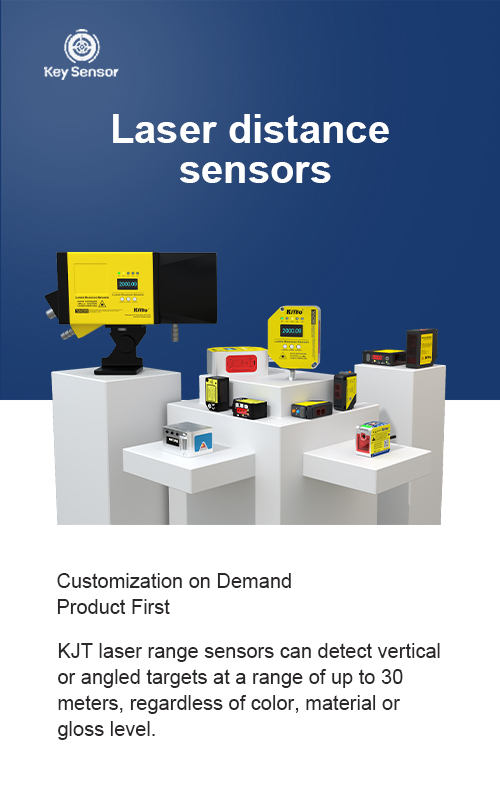
The core advantage of Keyence’s laser triangulation system lies in its ability to provide real-time measurements with minimal error. Unlike optical sensors that may be affected by ambient light or surface reflectivity, the laser sensor relies on the consistent properties of the laser beam. This makes it highly reliable in applications where precision is critical, such as in assembly lines, material handling, and non-destructive testing.
In industrial settings, the Keyence Laser Triangulation Laser Sensor is often integrated with control systems to enhance automation. For instance, in robotic arms, the sensor can detect the position of objects and adjust the robot’s movement accordingly. This not only improves efficiency but also reduces the risk of errors and increases productivity. Additionally, in quality control, the sensor can inspect products for defects with high precision, ensuring that only合格的产品 are released to the market.
One of the most significant benefits of this technology is its versatility. Keyence’s sensors are compatible with a wide range of industrial systems and can be adapted to different environments. Whether it’s a high-speed production line or a small-scale manufacturing unit, the sensor can be tailored to meet specific needs. This flexibility makes it a popular choice among manufacturers looking to upgrade their processes.
Moreover, the integration of Keyence’s laser triangulation technology into modern industrial systems has significantly improved the accuracy and reliability of measurements. As industries continue to adopt more advanced automation, the demand for high-precision sensors like the Keyence Laser Triangulation Laser Sensor is growing. This trend is expected to drive further innovation and development in the field of industrial automation.
In conclusion, the Keyence Laser Triangulation Laser Sensor represents a significant advancement in industrial automation. Its precision, reliability, and versatility make it an essential tool for modern manufacturing and quality control. As technology continues to evolve, the role of such sensors will become even more critical in achieving higher standards of performance and efficiency.





















 +40729977919
  keysensor.ro@gmail.com


