Arduino Lidar 3D Scanner: A Versatile Tool for Precision Measurement and Robotics
In today’s rapidly evolving technological landscape, the integration of sensors and microcontrollers has opened new frontiers in automation, robotics, and industrial applications. One such innovation that has gained significant traction is the Arduino-based Lidar 3D scanner. This device combines the precision of LiDAR (Light Detection and Ranging) with the flexibility of the Arduino platform, making it an ideal solution for applications ranging from small-scale robotics to large-scale environmental monitoring.
The core of the Arduino Lidar 3D scanner lies in its ability to generate high-resolution 3D point clouds by emitting laser pulses and measuring the time it takes for the light to return to the sensor. This process, known as time-of-flight (TOF), allows for the creation of detailed spatial maps of the environment. Unlike traditional 3D scanners that rely on cameras or structured light, LiDAR provides accurate and consistent measurements, even in challenging lighting conditions.
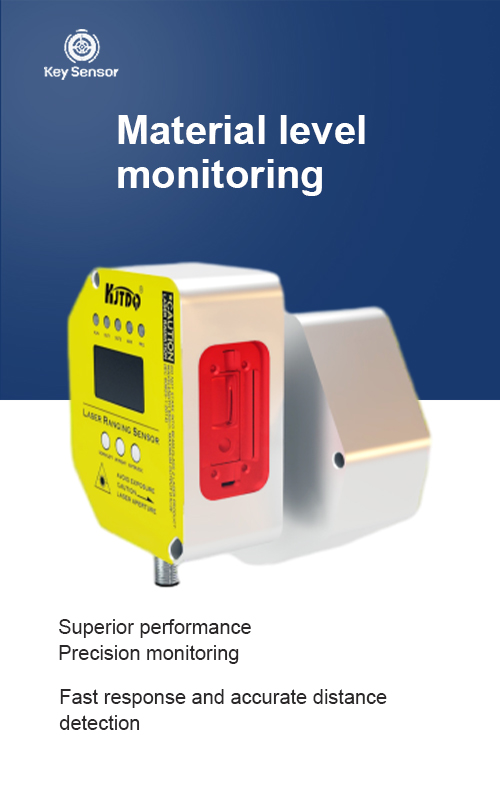
One of the most notable advantages of the Arduino-based Lidar 3D scanner is its simplicity and cost-effectiveness. While professional LiDAR systems are often expensive and complex, the Arduino platform offers a compact, affordable, and customizable solution. Users can easily integrate the sensor into their projects by connecting it to an Arduino board and writing custom firmware to process the data. This makes it an excellent choice for hobbyists, educators, and small-scale developers who want to experiment with 3D scanning without the need for extensive hardware or software expertise.
Moreover, the integration of LiDAR with the Arduino platform enables real-time data processing, which is crucial for applications such as autonomous navigation, object detection, and environmental mapping. The 3D point cloud generated by the scanner can be used to create detailed models of objects or environments, which can then be analyzed using software tools. This capability has made the Arduino Lidar 3D scanner a valuable tool in fields like robotics, agriculture, and construction.
Another key feature of the Arduino Lidar 3D scanner is its adaptability. Users can modify the code and hardware to suit specific needs, whether it’s scanning a small room, mapping a complex terrain, or detecting obstacles in a dynamic environment. The open-source nature of the Arduino ecosystem fosters a community-driven development model, where users can share their projects, troubleshoot issues, and contribute to the evolution of the technology.
In addition to its technical benefits, the Arduino Lidar 3D scanner also offers a compelling value proposition. Its affordability and ease of use make it accessible to a wide audience, including students, researchers, and small businesses. With the right setup, users can quickly deploy a 3D scanning solution that meets their specific requirements, reducing the time and cost associated with developing similar systems from scratch.
As the demand for precise and flexible measurement tools continues to grow, the Arduino Lidar 3D scanner stands out as a powerful and versatile solution. Whether used in a classroom setting to teach engineering principles or in a real-world application to support autonomous systems, this device exemplifies the potential of combining hardware and software for innovation.
In summary, the Arduino Lidar 3D scanner is not just a tool for 3D scanning—it is a gateway to new possibilities in automation, robotics, and data acquisition. Its combination of precision, flexibility, and affordability makes it an essential component in modern technological development. With the right application, it can transform how we perceive and interact with the physical world.





















 +40729977919
  keysensor.ro@gmail.com


