Riegl Lidar Laser Sensor: Precision, Efficiency, and Innovation in Modern Surveying
In today’s rapidly evolving technological landscape, the demand for high-precision measurement tools has never been greater. Among the most advanced and reliable instruments in this field is the Riegl Lidar Laser Sensor. This cutting-edge device combines laser technology with high-resolution imaging to deliver exceptional accuracy and efficiency in surveying, mapping, and 3D modeling. As industries continue to rely on precise data for everything from construction to environmental monitoring, the Riegl Lidar Laser Sensor stands out as a pivotal tool.
The Riegl Lidar Laser Sensor operates by emitting laser pulses from a high-powered laser source, which then measures the distance to objects in the environment. These pulses are reflected back to the sensor, and the time it takes for the pulse to return is used to calculate the distance with remarkable precision. Unlike traditional surveying tools, the Riegl Lidar sensor can capture data in a single pass, significantly reducing the time and effort required for large-scale surveys.
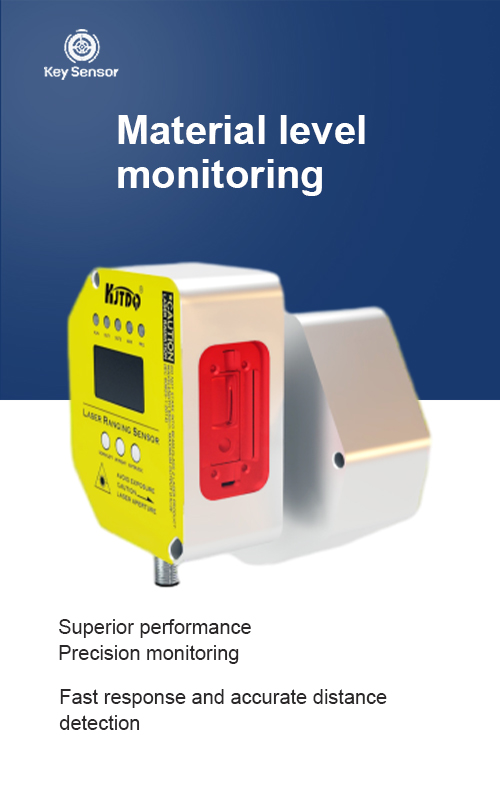
One of the key advantages of the Riegl Lidar Laser Sensor is its ability to provide high-resolution 3D data. This makes it an ideal choice for applications where detailed spatial information is critical. Whether it’s creating a precise topographical map, monitoring changes in a construction site, or generating digital twins for urban planning, the Riegl sensor delivers data with an accuracy that surpasses many other systems. Its high-resolution imaging also allows for the detection of subtle changes in the environment, making it a valuable tool in monitoring environmental degradation or urban development.
The Riegl Lidar Laser Sensor is not just about accuracy—it’s also about efficiency. With the ability to process large volumes of data quickly, it reduces the time required for data collection and analysis. This is particularly beneficial in industries where speed and precision are both critical. For example, in the construction industry, the sensor can generate detailed models of a site in a fraction of the time it would take traditional methods, allowing for faster project planning and execution.
Another significant feature of the Riegl Lidar Laser Sensor is its versatility. It can be used in a wide range of environments, from open terrain to complex urban settings. Whether it’s in a factory, a forest, or a city, the sensor adapts to the conditions and delivers reliable results. This adaptability is a result of its advanced software and hardware design, which allows it to adjust to different light conditions and environmental factors.
In addition to its technical capabilities, the Riegl Lidar Laser Sensor is also a product of innovation. Riegl, a leading company in the field of lidar technology, has continuously pushed the boundaries of what is possible with laser sensors. Their commitment to research and development ensures that the sensor remains at the forefront of technological advancements. This innovation is evident in the sensor’s ability to integrate with other technologies, such as GPS and GIS, to provide a comprehensive view of the environment.
The impact of the Riegl Lidar Laser Sensor extends beyond the technical aspects. It is a transformative tool that has revolutionized the way data is collected and analyzed. For professionals in surveying, mapping, and 3D modeling, the sensor represents a significant leap forward in the field. It enables more accurate, faster, and more efficient data collection, which in turn leads to better decision-making and improved outcomes.
In conclusion, the Riegl Lidar Laser Sensor is a game-changer in the field of measurement and mapping. Its combination of precision, efficiency, and versatility makes it an essential tool for professionals across various industries. As technology continues to advance, the Riegl Lidar Laser Sensor will remain at the forefront of innovation, delivering reliable data and driving progress in the future.





















 +40729977919
  keysensor.ro@gmail.com


