Laser Sensor for Object Detection: Enhancing Accuracy and Efficiency in Modern Automation
In today’s rapidly evolving technological landscape, precision and efficiency are at the heart of automation and industrial processes. Among the many sensors used in modern systems, the laser sensor for object detection has become a crucial component in various applications, from robotics to quality control. This article explores the role of laser sensors in object detection, their working principles, and how they contribute to achieving high accuracy and efficiency in automated systems.
Laser sensors for object detection work by emitting a laser beam and measuring the time it takes for the beam to reflect back after hitting an object. This reflection helps determine the distance and position of the object relative to the sensor. The key advantage of laser sensors is their ability to detect objects with high precision, even in low-light conditions or in complex environments. Unlike traditional sensors, laser sensors can operate without physical contact, making them ideal for applications where direct contact might be disruptive or impractical.
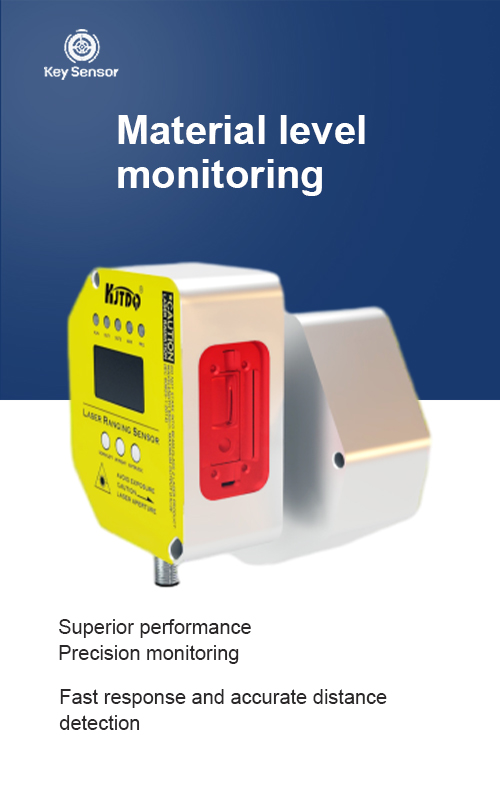
One of the main applications of laser sensors for object detection is in robotics. In automated manufacturing lines, robots often need to detect and interact with objects in real time. Laser sensors provide accurate distance measurements, allowing robots to navigate and perform tasks with precision. For example, in warehouse automation, laser sensors can detect the presence of items on conveyor belts, enabling seamless inventory management and reducing human intervention.
In the quality control industry, laser sensors are used to inspect products for defects or inconsistencies. By emitting a laser beam and analyzing the reflection, sensors can detect even the smallest deviations in product dimensions or surface flaws. This capability ensures that products meet strict quality standards and minimizes waste in production processes.
Another significant application is in autonomous vehicles. Laser sensors are used in autonomous driving systems to detect obstacles and other vehicles. The ability to detect objects at a distance and with high accuracy is vital for ensuring safe navigation and avoiding collisions. As autonomous technology continues to advance, the role of laser sensors in object detection becomes even more critical.
Despite their benefits, laser sensors for object detection are not without challenges. Factors such as environmental interference, temperature fluctuations, and beam divergence can affect the accuracy of measurements. To overcome these limitations, manufacturers continuously improve the design and technology of laser sensors, integrating advanced signal processing and adaptive algorithms to enhance performance.
In addition to their technical capabilities, laser sensors also offer cost-effectiveness and maintenance efficiency. Since they do not require physical contact with the object, they reduce wear and tear, lowering long-term operational costs. This makes them a preferred choice in applications where frequent sensor replacement is necessary.
As industries continue to adopt smart and automated technologies, the importance of laser sensors for object detection will only grow. Their ability to provide real-time, high-accuracy data makes them an essential tool in modern automation. Whether in robotics, quality control, or autonomous systems, laser sensors are paving the way for more efficient and intelligent processes.
The integration of laser sensors into automated systems represents a significant step forward in the advancement of technology. As we move toward a more connected and intelligent future, the role of laser sensors in object detection will remain central to achieving precision, efficiency, and innovation.





















 +40729977919
  keysensor.ro@gmail.com


