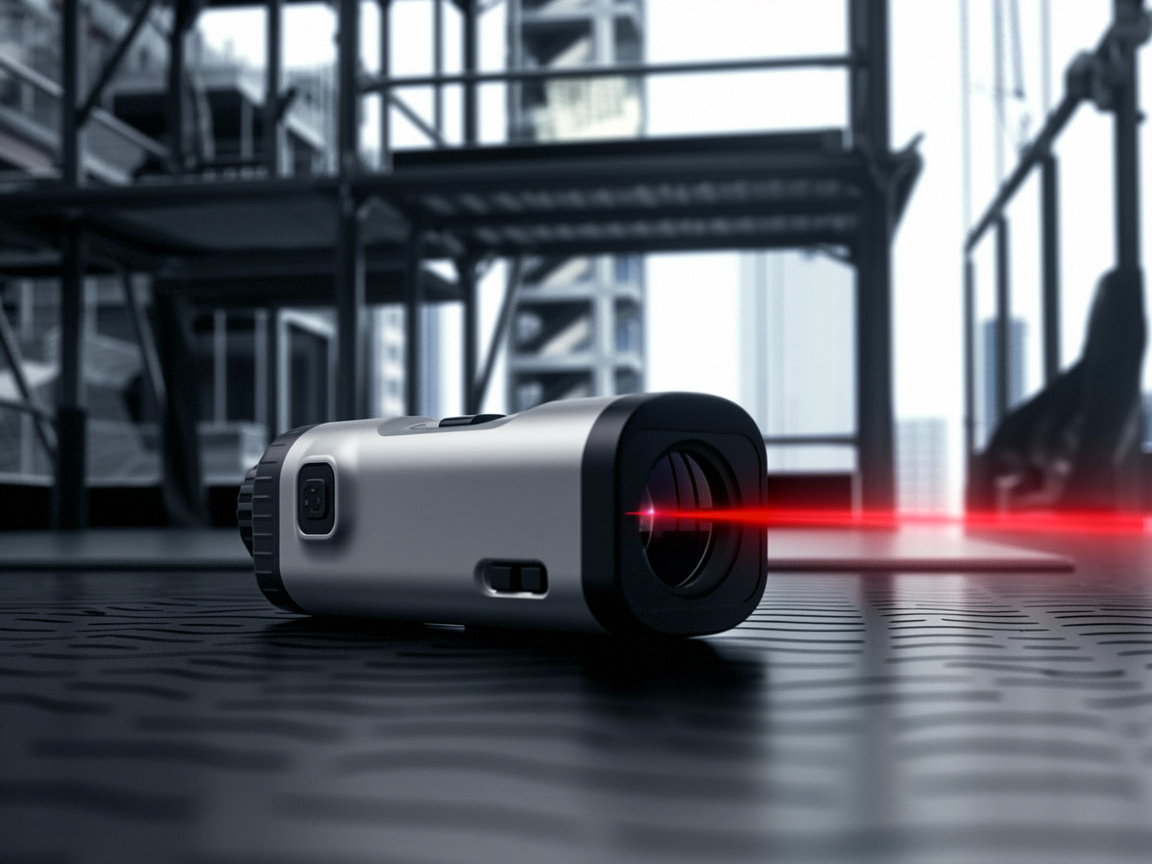
A laser sensor is a sensor that uses laser technology to detect and measure objects, and it is widely used in industrial automation, ranging, displacement detection, and level monitoring. To better understand the working principle of laser sensors, we first need to understand the nature of lasers .
Laser is an abbreviation for "light amplification through stimulated emission." The light produced by a laser source has the following characteristics:
Monochromaticity : Laser light is almost a single wavelength of light, unlike ordinary white light which has multiple wavelengths. The color or frequency of laser light is fixed.
Coherence : The phase relationship between laser light waves is stable, which allows the laser to maintain a high degree of directionality and to propagate over long distances without diverging.
Highly directional : The laser beam has extremely high directionality, with a very small divergence angle, and can maintain the concentration of light over long distances.
High brightness : The brightness of lasers far exceeds that of ordinary light sources, and their energy is highly concentrated.
Laser sensors primarily work by illuminating a target object with a laser beam, which is then reflected back. The sensor receives the reflected light and performs calculations to achieve ranging, detection, or positioning functions. The core working principle of a laser sensor includes the following steps:
Laser emission : The laser inside the laser sensor emits a laser beam. The laser beam travels through the air and illuminates the surface of the object.
Light reflection : When a laser beam strikes the surface of an object, part of the laser beam is reflected back. The reflected laser beam may be deflected due to factors such as the smoothness of the object's surface and its angle.
Receiving reflected light : The laser sensor contains a receiver (usually a photodiode or CCD) that is responsible for receiving the reflected laser light.
Distance Calculation : By measuring the time difference between the emission and return of light, the sensor can calculate the distance between the laser beam and the surface of an object. Modern laser sensors typically use Time-of-Flight (ToF) or triangulation methods to perform distance calculations.
High precision : Laser sensors have very high measurement accuracy, capable of measuring at the micrometer level, and are widely used in precision manufacturing and inspection.
Non-contact measurement : Laser sensors do not require contact with the object being measured, making them suitable for measurement tasks in high-speed, fragile, or hazardous environments.
Long-distance measurement : Due to the directionality and concentration of lasers, laser sensors can perform measurements over long distances, even tens of meters or more.
Adaptable to harsh environments : Laser sensors are not affected by many physical factors, such as temperature changes and humidity, and have strong adaptability, making them widely used in industrial environments.
Laser displacement sensor : Used to measure the displacement or contour of an object, it has extremely high precision and is often used in precision machining and measuring the shape and position of workpieces.
Laser rangefinder : It measures the distance to an object by calculating the time it takes for a laser beam to travel from emission to return. It is widely used in fields such as construction and engineering surveying.
Laser light curtain sensor : It uses a laser array to form a light curtain to detect whether an object passes through the light curtain. It is often used in applications such as safety protection and material counting.
Laser level sensor : It uses laser technology to measure liquid level and is suitable for monitoring the liquid level in liquid storage tanks or containers.
Lasers are essentially monochromatic, coherent, and highly directional light waves generated through stimulated emission. These properties make lasers widely used in sensors for non-contact, high-precision object measurement, positioning, and detection. Laser sensors, due to their advantages of high precision, long-range measurement, and non-contact operation, have become important tools in modern industry, automation, and scientific research.











 +40729977919
  keysensor.ro@gmail.com


