Laser Sensor Technology in Modern Industry: Enhancing Precision and Efficiency
In today’s fast-paced manufacturing and industrial sectors, the integration of advanced technologies has become essential for optimizing operations and improving product quality. Among these innovations, laser sensors have emerged as a game-changer, offering unparalleled precision and efficiency in real-time monitoring and automation. This article explores the role of laser sensors in modern industry, highlighting their benefits, applications, and how they contribute to the advancement of industrial processes.
Laser sensors operate by emitting a focused beam of light and measuring the time it takes for the beam to return to the sensor after reflecting off an object. This principle allows for highly accurate distance measurement, making them ideal for applications where precision is critical. Whether it’s in robotics, quality control, or material handling, laser sensors provide reliable data that supports decision-making and automation.
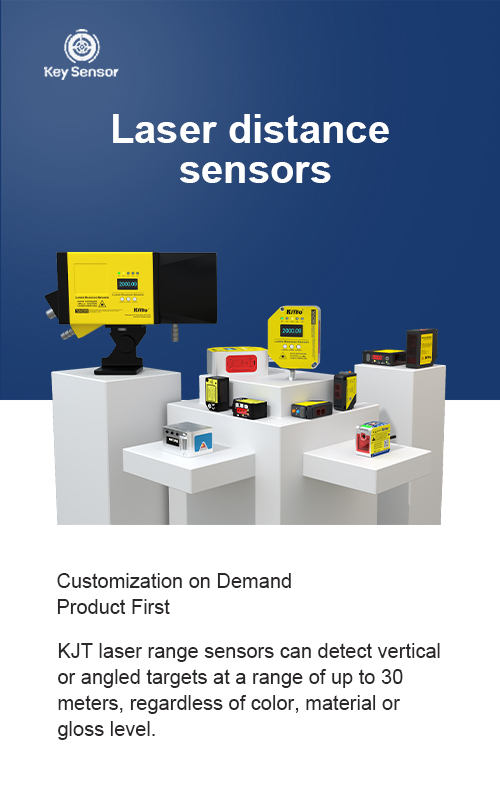
One of the key advantages of laser sensors is their non-contact measurement capability. Unlike traditional sensors that require physical contact with the object being measured, laser sensors can operate at a distance, reducing the risk of damage and improving measurement accuracy. This is particularly beneficial in environments where direct contact may introduce errors or be impractical. For example, in food processing, laser sensors can inspect products without touching them, ensuring hygiene and maintaining product integrity.
In manufacturing, laser sensors are widely used in precision machining and quality control systems. They enable real-time monitoring of cutting processes, helping to maintain consistency and reduce waste. By detecting minute variations in product dimensions, laser sensors allow manufacturers to adjust parameters on the fly, ensuring that output meets stringent specifications. This level of control is crucial in industries where even the smallest deviation can lead to significant costs or safety issues.
Moreover, laser sensors are integral to automated guided vehicles (AGVs) and robotic systems, where precise navigation and object detection are necessary. These sensors work in tandem with other technologies to enable robots to move and interact with their environment without human intervention. This not only increases productivity but also reduces the likelihood of human error, making the manufacturing process safer and more efficient.
Another important application of laser sensors is in non-destructive testing (NDT). They are used to inspect materials and structures without causing any damage, which is especially valuable in aerospace, automotive, and construction industries. By detecting flaws or changes in material properties, laser sensors help ensure the safety and reliability of products and infrastructure.
The use of laser sensors is not limited to industrial settings; they are also playing a growing role in smart cities and IoT (Internet of Things) systems. In urban environments, laser sensors are employed to monitor traffic flow, detect obstacles, and optimize traffic signals, contributing to smoother and safer traffic management. In healthcare, they are used in medical imaging and diagnostics, providing high-resolution data that aids in early disease detection.
As technology continues to evolve, the capabilities of laser sensors are expanding. Advances in laser technology, such as longer wavelengths and improved sensitivity, are enabling even more precise measurements and broader applications. Additionally, the integration of AI and machine learning with laser sensors is paving the way for predictive maintenance and intelligent automation, further enhancing their value in industrial processes.
In conclusion, laser sensors are a critical component of modern industry, offering precision, reliability, and efficiency. Their versatility and adaptability make them essential in a wide range of applications, from manufacturing to smart cities. As industries continue to seek ways to improve productivity and quality, the role of laser sensors will only become more significant. By leveraging the power of laser technology, industries can achieve greater control, reduce costs, and drive innovation in the future.











 +40729977919
  keysensor.ro@gmail.com




