Laser Sensors: The Future of Accurate Measurement in Industrial Automation
In today’s rapidly evolving industrial landscape, the demand for precision and efficiency has never been higher. Among the various technologies that drive automation, laser sensors have emerged as a critical component in ensuring accurate measurement and control. These sensors are widely used in manufacturing, quality control, and material handling processes, offering unparalleled accuracy, speed, and reliability. This article explores the role of laser sensors in modern industrial applications, their key features, and how they contribute to the advancement of automation.
Laser sensors operate by emitting a laser beam and measuring the reflected signal to determine the position or distance of an object. This method is highly accurate, capable of detecting objects at a distance with minimal interference from environmental factors. Unlike traditional sensors, laser sensors provide a non-contact measurement, which reduces wear and tear and increases system longevity. Their ability to work in a wide range of environments makes them ideal for use in harsh industrial settings.
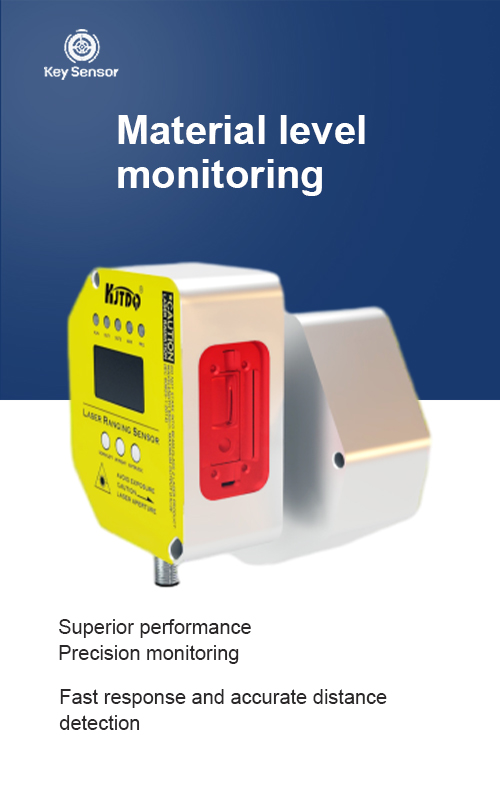
One of the most significant advantages of laser sensors is their high precision. They can measure dimensions with an accuracy of ±0.01mm, making them suitable for applications where even the smallest deviation can have a major impact on product quality. For instance, in precision manufacturing, laser sensors are used to inspect parts for dimensional accuracy, ensuring that each component meets strict tolerances. This level of precision not only enhances product quality but also reduces waste and rework costs.
In addition to their high accuracy, laser sensors are known for their versatility. They can be adapted for various applications, from distance measurement to object detection and material thickness measurement. This flexibility allows them to be integrated into different systems, including robotic arms, conveyor belts, and automated inspection systems. As industries continue to adopt Industry 4.0 principles, the integration of laser sensors into automation systems has become essential for achieving real-time data acquisition and intelligent decision-making.
The key features of laser sensors include their non-contact operation, high accuracy, and robust performance in diverse environments. They are also energy-efficient, which reduces operational costs and environmental impact. Furthermore, laser sensors can be easily calibrated and maintained, ensuring consistent performance over time.
As the demand for precision and efficiency increases, laser sensors will continue to play a pivotal role in shaping the future of industrial automation. Their ability to provide reliable, accurate, and real-time data makes them an essential tool for manufacturers looking to improve productivity and quality. With ongoing advancements in sensor technology, the potential applications of laser sensors are expanding, opening up new opportunities in various industries.
In conclusion, laser sensors are more than just a technological advancement—they are a fundamental enabler of modern automation. Their precision, versatility, and reliability make them an indispensable part of industrial processes. As industries continue to evolve, the role of laser sensors will only become more critical, driving innovation and efficiency in the manufacturing sector.











 +40729977919
  keysensor.ro@gmail.com




